
"Marie"
Ballet, the flower that blooms for only one day

One of the most common questions I’ve gotten about Infinite Steps is '“How did you and Gene decide which dancers to have in the book?”
I can understand why someone would wonder. From the hundreds of dancers Gene (my collaborator, the photographer Gene Schiavone) photographed— and the hundreds of thousands of dancers out there— what did each of these thirty-three have that made them extra special or, at least, merit a chapter in this particular book? Did we have criteria? Were we, in a way, “auditioning” these dancers?
The answer is that the dancers of Infinite Steps share certain common denominators— but also, importantly, they have many things NOT in common. For starters, we had to work with the photos Gene had— he insisted he was not coming out of retirement just for this book— and from those, we narrowed it down to the dancers of whom he had enough photos that met his own standards (photographers are as nit-picky as dancers, I’ve learned.) Every dancer he’d photographed had a story that was worth telling, so then we had to do some hard thinking about what exactly we wanted this book to portray. It could simply be a collection of lovely pictures and interesting facts, or it could be much more. We had the chance to go beneath the surface, to examine the many facets of the artistic life.
We both felt strongly that we needed to show a wide variety of “types”: not just famous names or those who followed well-traveled routes to and through a career, but people from as far around both the geographical and balletic worlds as we could. We wanted to take readers on thirty-three distinct but equally fascinating, thought-provoking, and meaningful walks through the adventures of these dancers’ lives. And, as Gene and I wholeheartedly agreed, we would not avoid showing, with frankness and as much transparency as the dancers themselves gave us, both the “dark and the light” of those lives. Without exaggeration, but also without sugarcoating.
We cringe at the melodrama of pop-culture ballet, but we’ve both been in and around the business ourselves enough to know that there is drama— and risk, with no guarantee of payout. Every day is a gamble, every performance a giant “maybe.” The routine of our classwork, the consistency of our tendus, is as emotionally stabilizing as it is foundational for our technique.
In fact, in ballet, as opposed to a real game of chance, there’s not even clarity on what the “prize” is. Dancers often start wandering down the roads of the ballet-world forest imagining where they want to end up, only to find themselves, again and again, at junctures and forks that were not on the map. Because there wasn’t a map to begin with. In this book, we could show that everyone who braves it will end up charting their very own course.
One dancer that Gene told me he thought should have a place in Infinite Steps was, I came to see, an example of what happens when the uncertainty, the fog, the fear of losing one’s way makes us cling so hard to what we think is the steering wheel of life that we skid off the road all together.
This dancer is “Marie,” the only dancer in a book full of icons, unknowns, and up-and-comers who is unnamed.
“Ballet… it’s like a flower that only blooms for a day. It’s so exquisite; you see it and then it’s gone. There are other places to find it in the world, but it’s going to take me some time.”
Gene showed me the few photos he had of Marie, a sweet-looking young woman with a beautiful smile. But in this case, what was more important than her images was her story: Gene had learned that during the years he’d been photographing her, this outgoing, cheerful, personable, friendly person had been, unbelievably, hiding something huge and frightening: the strong, invisible demons that were wrestling for control of her mind and body. Who can say who won? Eventually, Marie left her ballet career with a severe case of bulimia.
Marie’s story, as dark and upsetting as it is, could help a lot of people— whether or not their lives were touched by disorders such as hers. Gene found an email address and sent Marie a note, musing on the passage of time and describing our project. He asked if she would be willing to participate. Time passed, no response. Finally she did reply, with the same warmth and sincerity that Gene had described to me, but saying that the past was too painful to relive. She didn’t want to be part of the book. I was disappointed— I’d already begun to think of Marie as a sort of grounding force, a spine for the entire project. Gene proposed we offer Marie anonymity— and to that, she did agree.
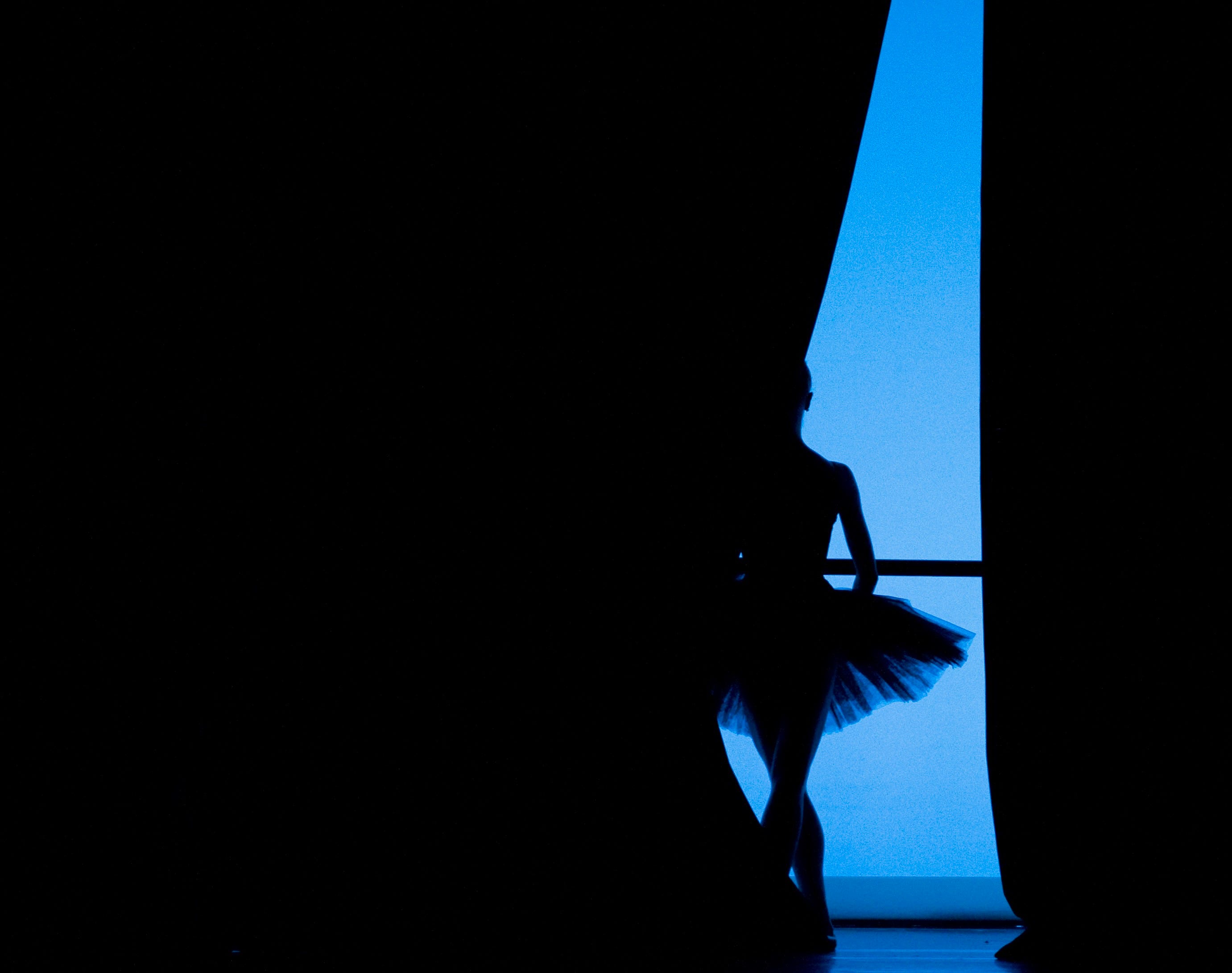
Marie and I had two phone conversations, a couple of months apart, each nearly two hours long. From our very first “hello,” I felt like I’d reconnected with an old friend— conversation with Marie was that easy. She must have felt the same way, because as we settled in, Marie told me to get ready. “I’m going to tell you everything,” she said. And she did.
At nine pages, Marie’s is the longest chapter in Infinite Steps. But there was even more I could have written, and more that I wanted to write. Bulimia was only part of her story— that’s the part the made-for-TV movie would have focused on— but behind and beyond that was a person assaulted by other people’s needs, desires, false beliefs and some maybe good but very misguided and ill-considered intentions. Marie could have become a victim, but she didn’t. The disease almost took her life, but Marie took it back. She’s smarter than it is, and wiser, despite the chaos it created in her brain and body. When people around her ignored or denied the severity of her distress, she had the ability to see herself from afar, almost as if she put herself in the future and looked back at the now— a kind of present-moment hindsight we all wistfully wish for.
Ultimately, Marie found therapy and treatment. While she says there is no “cure,” she is in a sort of remission. She lives far removed from ballet now, but like all the dancers I know who’ve moved on, it remains part of her inner life. She has children and a happy marriage, although she’s estranged from her parents, who to this day have never met their grandchildren (Marie’s family dynamic was the root of her eating disorder, prolonged her recovery, and contributed to relapses.) She still loves to move— needs to move— and wanted to do our interviews on the phone instead of video conference so that she could walk around her house and yard while we talked (I can relate.)
Marie told me that her creative outlet these days is interior design. Not professionally, but she regularly looks around her home and sees new ways to arrange things, and when her kids are at school and her husband at work, she’ll move furniture and change the decor. I jokingly asked if she’d come over and redo my apartment someday, but seriously, I see symbolism: maybe Marie’s impulse to keep reassessing and rearranging her physical surroundings reflects her continual inner re-balancing. Or, perhaps, a slight fear of getting stuck again— of being trapped in the rut of the familiar.
At the end of our second conversation, I asked Marie about blame. Does she peg ballet as the culprit for all this, even though she’d already explained to me that the roots of her sickness were in place long before dance entered the scene (she also told me about her siblings, who did not dance but were also afflicted with eating disorders)? No, but there are ways she thinks ballet students could be trained that would arm them against the demons that assaulted her. The emphasis on excellence, she said, was needed but over-valued. If she could run an imaginary ballet school someday, how would she set it up? First of all, there’d be no mirrors, so students wouldn’t associate the sense of movement with their silhouette, nor would they learn to categorize themselves by body type. Without mirrors, they’d also learn to focus on those around them instead of only on their own image— both literally, in class, and in their relationships. “I’d teach children to take pride in the lowly jobs, not just the lead roles,” Marie explained. “I’ll take what’s given to me and I’ll do it well, with my head help up high. Train children to not see others as a barrier to their own ascent. In my twelve-step program for people with eating disorders, one of the slogans is, ‘Just for today.’ I think that’s helpful for all humans. Can you get through today with what’s in front of you? Can you get your eyes off yourself and help other people?” Ballet dancers need to be able to focus as keenly on their outer world as on themselves, she continued. “I would have been greatly helped by that myself,” she said. “I am somebody, I have worth whether my director notices me and gives me a thumbs-up or not. It’s important to create art not just for your sake or for its own sake. What is art for, if it’s only to become a better dancer than the person next to you? It should be about lighting up someone’s eyes.”
Nearing the end of our second conversation, when I was wondering how on earth I would distill Marie’s lifetime of psychological, physical, mental and emotional roiling into a single chapter, she said something that brought everything into focus. Marie did my work for me, handing me the through-line with the grace and generosity I hoped to extend to her.
“I had a thought the other day,” she said. “You’ve caused me to think about this in a kind of story-like way. From the beginning to the not-end, because it’s an arc, like a bird’s-eye view. It made me think of Apollo 13, which they called a ‘successful failure.’ Well, I got out alive and I’m doing really well. And looking back, I do have gratitude for some of the experiences I had. It almost killed me, but I made it out and I’m really glad to be alive.”
“I wish I’d known to accept what I had and to say, ‘it’s enough,’” Marie said. “Today, I know I am useful. I can do so much good for the world and those around me. I can have light in my eyes, have joy and pride and feel, ‘I belong here.’”
Odds and ends
Last weekend was a big one for me. May 2 marked the sixteenth anniversary of my farewell performance (can someone please tell me where those years have gone??) and on May 3, we had an absolutely wonderful, beyond-my-expectations Infinite Steps book signing and meet-and-greet at the Bloch store in Manhattan with two of the book’s dancers, Irina Dvorovenko and Maxim Beloserkovsky (read my last post about them here.) A huge, huge thank you to Bloch for so enthusiastically hosting us, to Max and Irina for speaking so expressively about legacy, education, and their appreciation of our book, to my dad and Deb for spreading the word throughout the Upper West Side and beyond, and to everyone who came out for a beautiful two hours of celebrating the collaborative arts of dance, photography, and writing.


My latest article for Pointe is now live! “When Auditioning For Choreographers or Repetiteurs, Bravery Beats Perfection,” despite the specificity of its title, applies to so many situations beyond a professional dancer’s casting call. For the article, I talked to BalletMet dancer Grace-Anne Powers, choreographer Trey McIntyre, and NYCB repertory director Craig Hall about why auditions— both generally and this particular type— are so inherently stressful, but why fear is, as Trey put it, “an unhelpful instinct that can be overridden.” The trick is acknowledging when you feel panic under pressure. “Identify the moment, know that you are not wrong for feeling it, but it’s a thing that can be worked out like a knot in a muscle. Nobody expects you to be a superhero in the studio,” he said. Words I will take to heart myself.
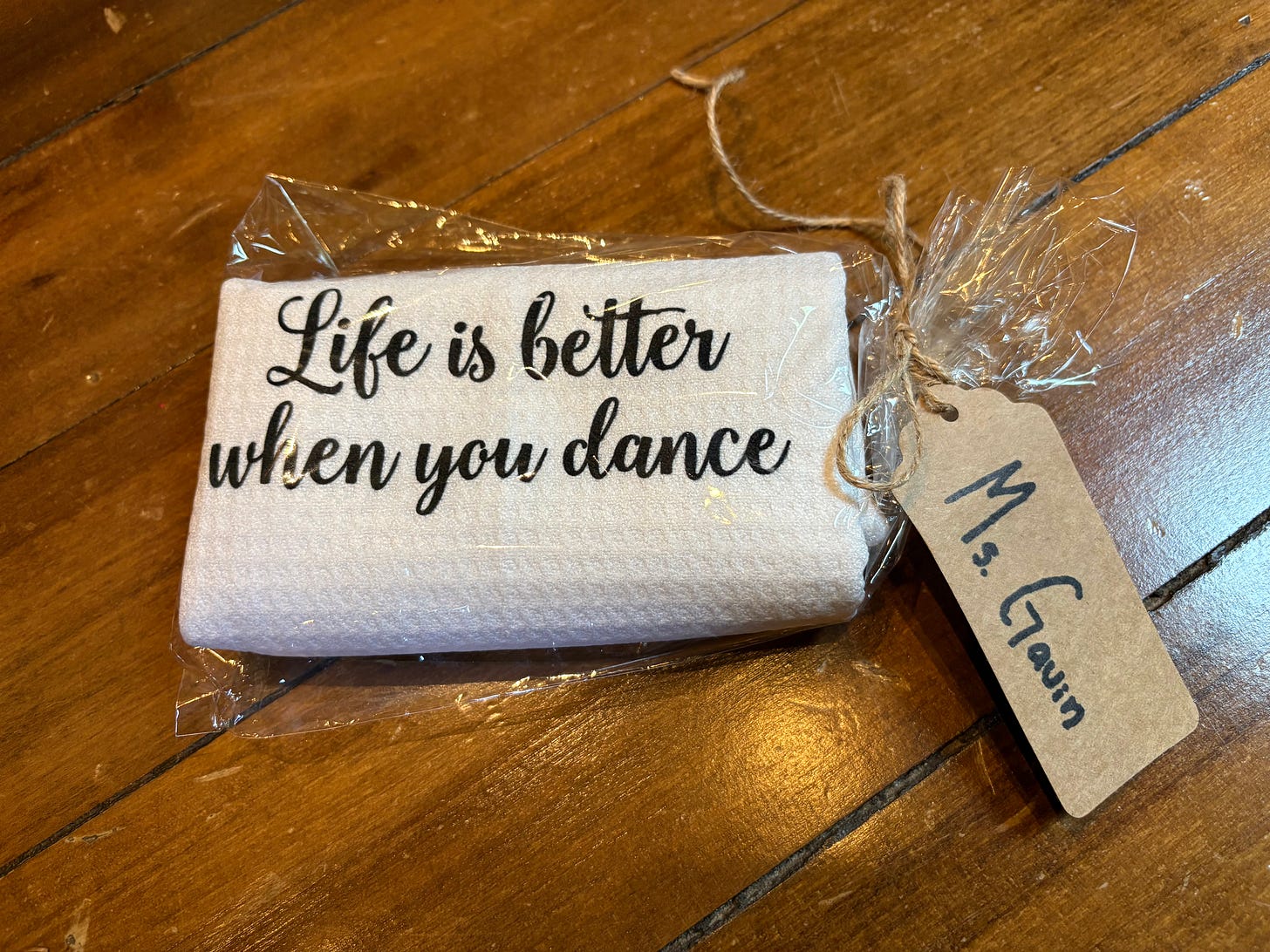
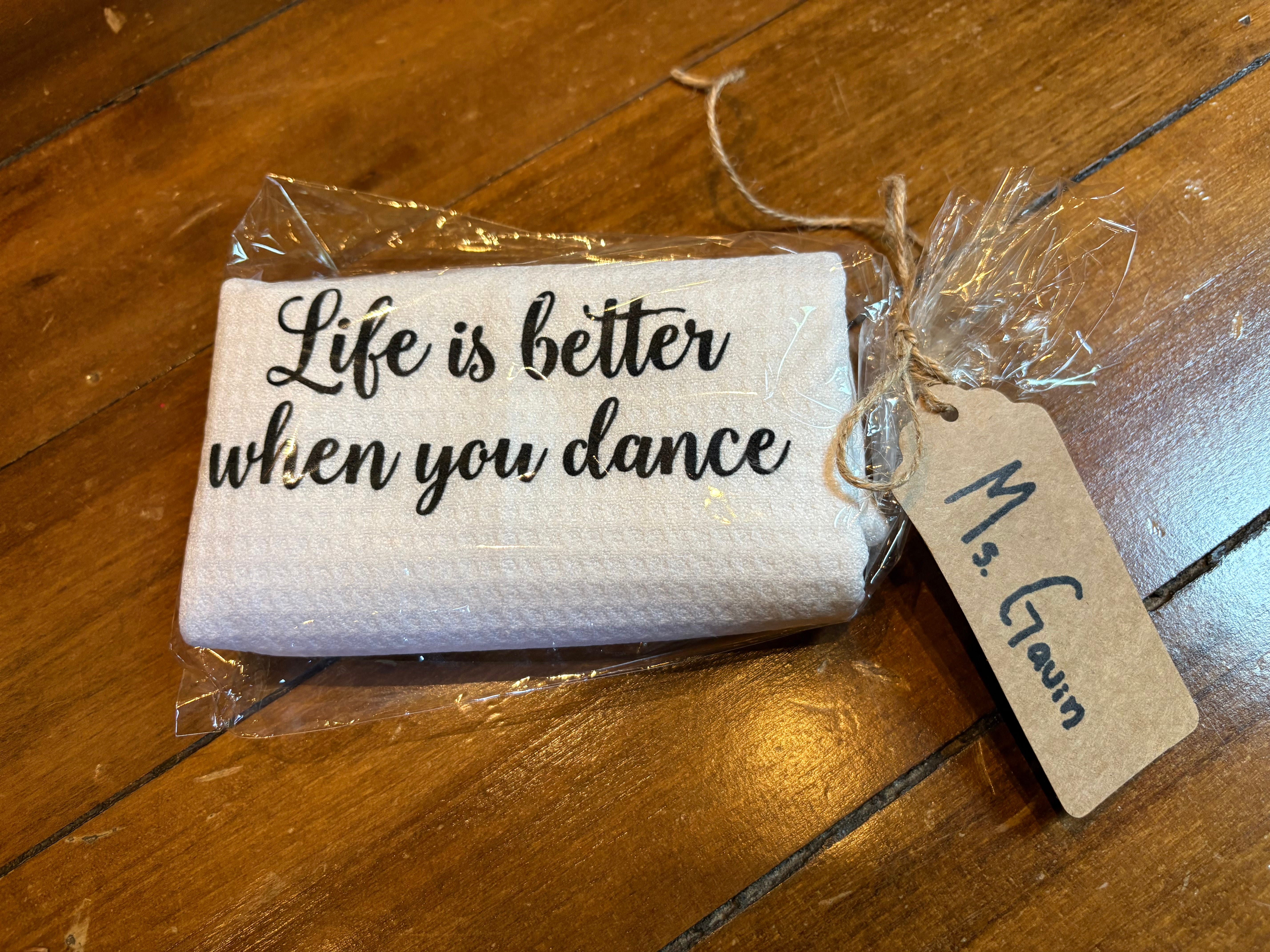
Last week was Teacher Appreciation Week. Did you know that? I didn’t. But thanks to one of my students, now I do!
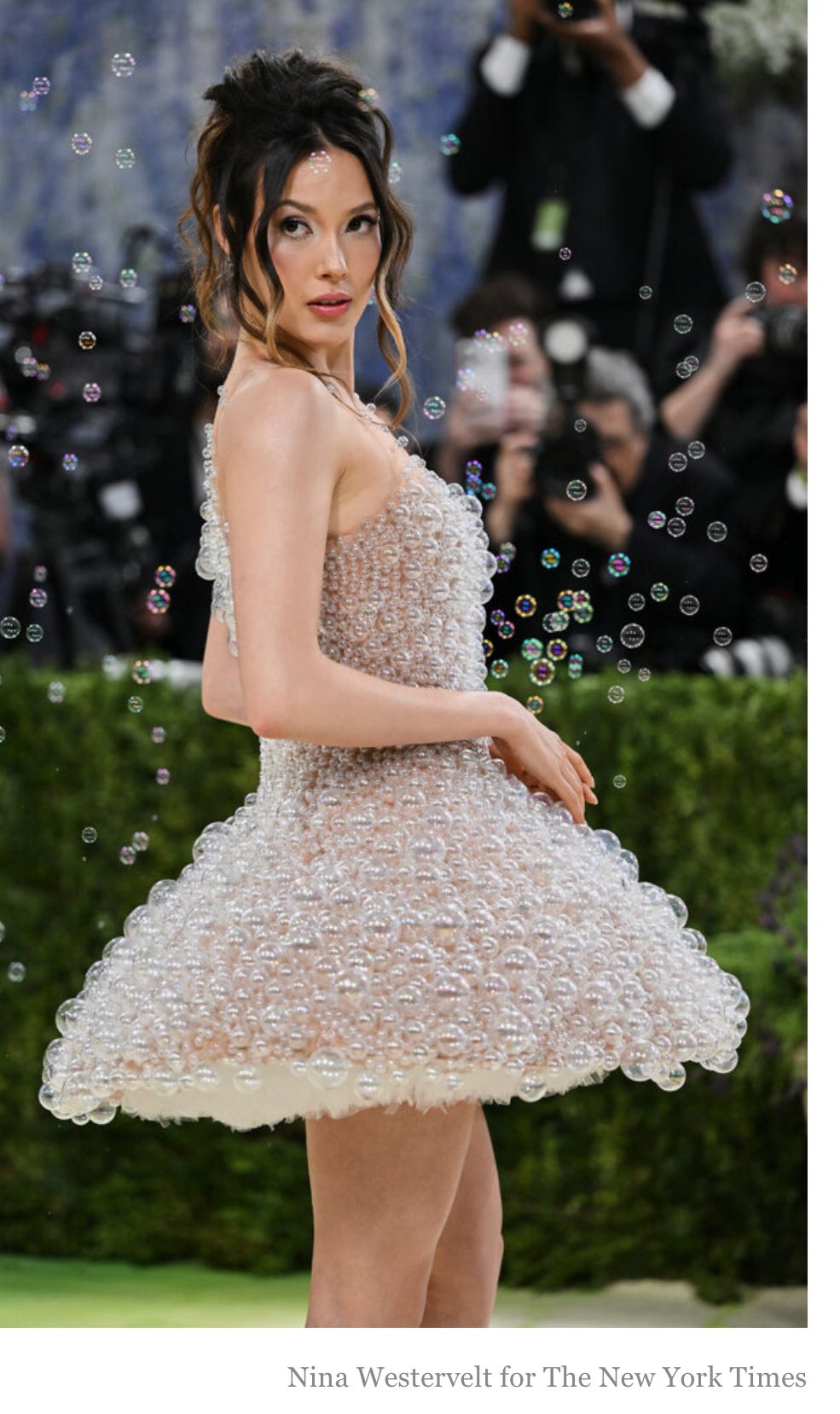
At the Met Gala, evidence that balletcore is still a thing.
Thanks, as always, for reading and following along! I do have an ask: If you have read either Infinite Steps or my first book, Being a Ballerina: The Power and Perfection of a Dancing Life, and felt positive about either one, would you mind taking a moment to leave a very brief (or not brief, if you’re so compelled!) review and rating on Amazon, Barnes and Noble, or any other online book site? (Goodreads is another good one, if you’re active on that platform.) Reader reviews and ratings are, in this day and age, the number one way an author can get their work in front of more people’s eyes. My personal network is only so wide, so after I’ve reached as far as I can, I’m relying on you to keep the ripple effect going. THANK YOU!


Just beautiful, as always, Gavin! You are such a graceful and expressive writer!
Thank you for writing this 🌸