

In this rare (unprecedented!) mid-week post, I’d like to tell you about the beautiful, eye- and mind-opening dance event I saw this past weekend at Trillium Arts.
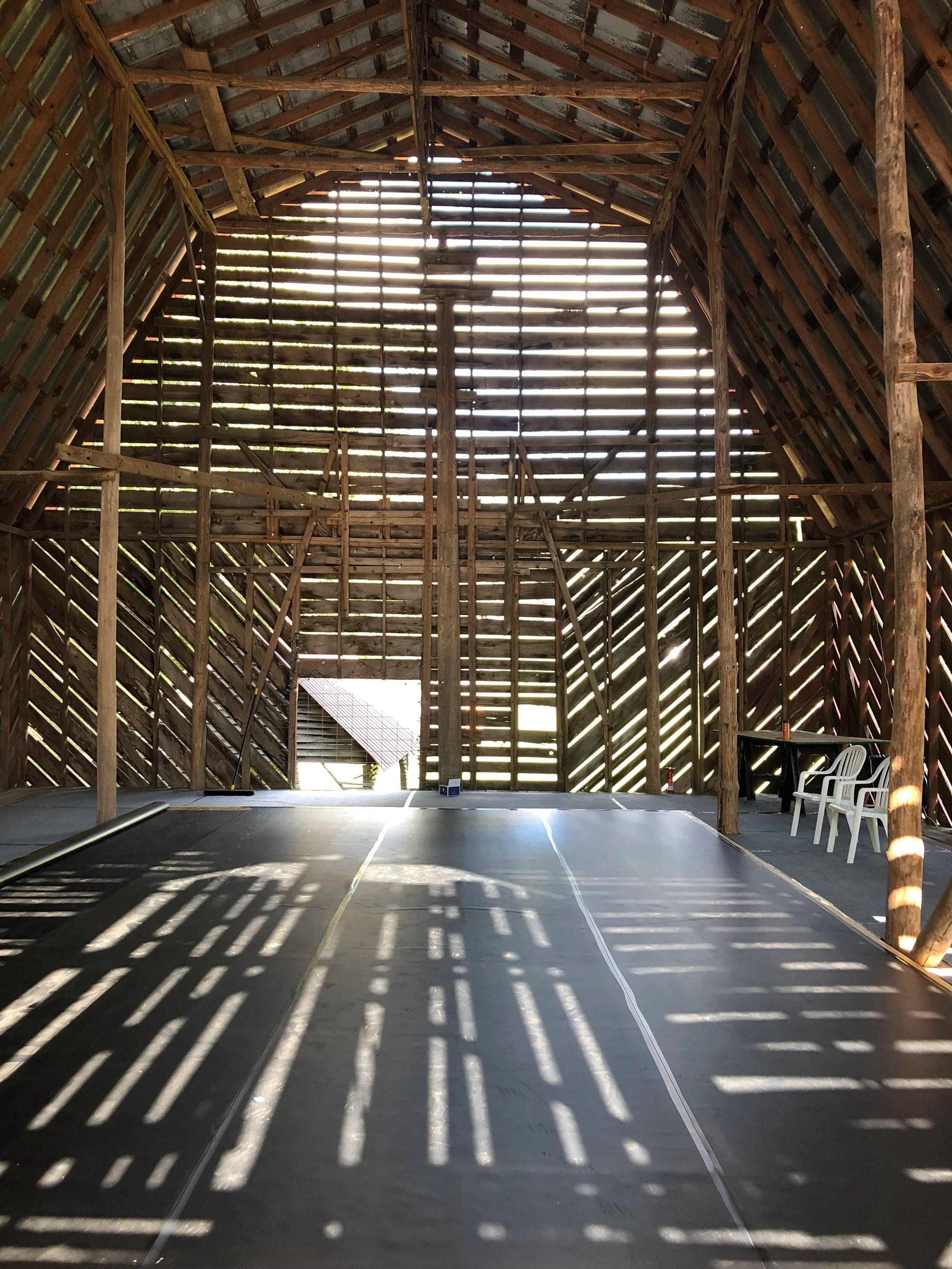
Trillium is an arts residency program in Mars Hill, NC, about a half-hour drive from Asheville. It’s in a bucolic, rural setting— perfectly quiet, conducive to thought and to both mental focus and daydreaming— where founders Heather Hartley and Phil Reynolds host artists of all types for week-long stays. The “Red Barn Studio” is, as per its name, a former barn that’s been transitioned into a space where dancers and choreographers can create, experiment, and develop new works. I’d been up to Trillium a couple of summers ago for a social event, but not set foot in or even laid eyes on the barn until last weekend, when I was invited to attend an informal showing at the culmination of a dance residency. The choreographer in residence was Marcelo Martinez, who’d spent a week there with three dancers, workshopping material for a new ballet. Its theme, specifically, is hurricane Helene. But more broadly and by extension, it’s about much more. To me, the work seemed like a distillation of the very nature of art— why we need it, why we do it, why it matters.
Marcelo and two of the dancers are from Raleigh, so they had not personally experienced the full trauma of the storm as it unfolded last year. But in the post-showing talk, Marcelo described coming to Asheville in the weeks almost immediately after Helene and being shocked, unsettled, and shaken by the destruction he saw. The third dancer on the retreat with Marcelo, however, did live through the storm herself. The process of developing and learning choreography that quite vividly portrayed the concepts of fear, loss, disappearance, uncertainty and instability was pretty hard for her. We texted midweek. “Being able to focus on art is a beautiful thing, but I was having an emotionally challenging time at the beginning,” she wrote. “I think I’ve found a way to remove my personal past experiences and allow it to come and go when I want it. But it still creeps in unexpectedly.”
As I was thinking about what I could say that might help her, I started to see the symbolism: here was an artist who, in re-living an event that was terrifying on a personal level, was now taking control of it. Not everyone who’s been through trauma has that kind of artistic outlet, nor do many dancers have such a poignant connection to a choreographer’s vision. I also realized how far we’ve come in a year. From saving lives and basic survival to securing the necessities of daily life, removing evidence of destruction, salvaging and rebuilding, we’re now processing what happened through art. I saw parallels emerging: Marcelo’s choreography, which depicts the actual elements of nature and the ways they intensified human connection and cooperation, also reflects the very nature of and intention of an artists’ residency. At times of high crisis, time seems to morph from a predictable foundation of our days into a wavy, squishy thing that forces an intense presence of mind. The artistic retreat, similarly, takes away the need to relentlessly check the clock and calendar— somewhat, since there’s always an end date— and makes an entire day feel like “now.”
Being at Trillium, Marcelo said, “allowed me to capture the moment of creation in its raw, authentic form. I had some ideas of steps, but when we got to the studio, I saw very clearly that the movement quality the dancers brought was different from what I had planned in my mind. So I let them be fluid, and they really made it their own.”
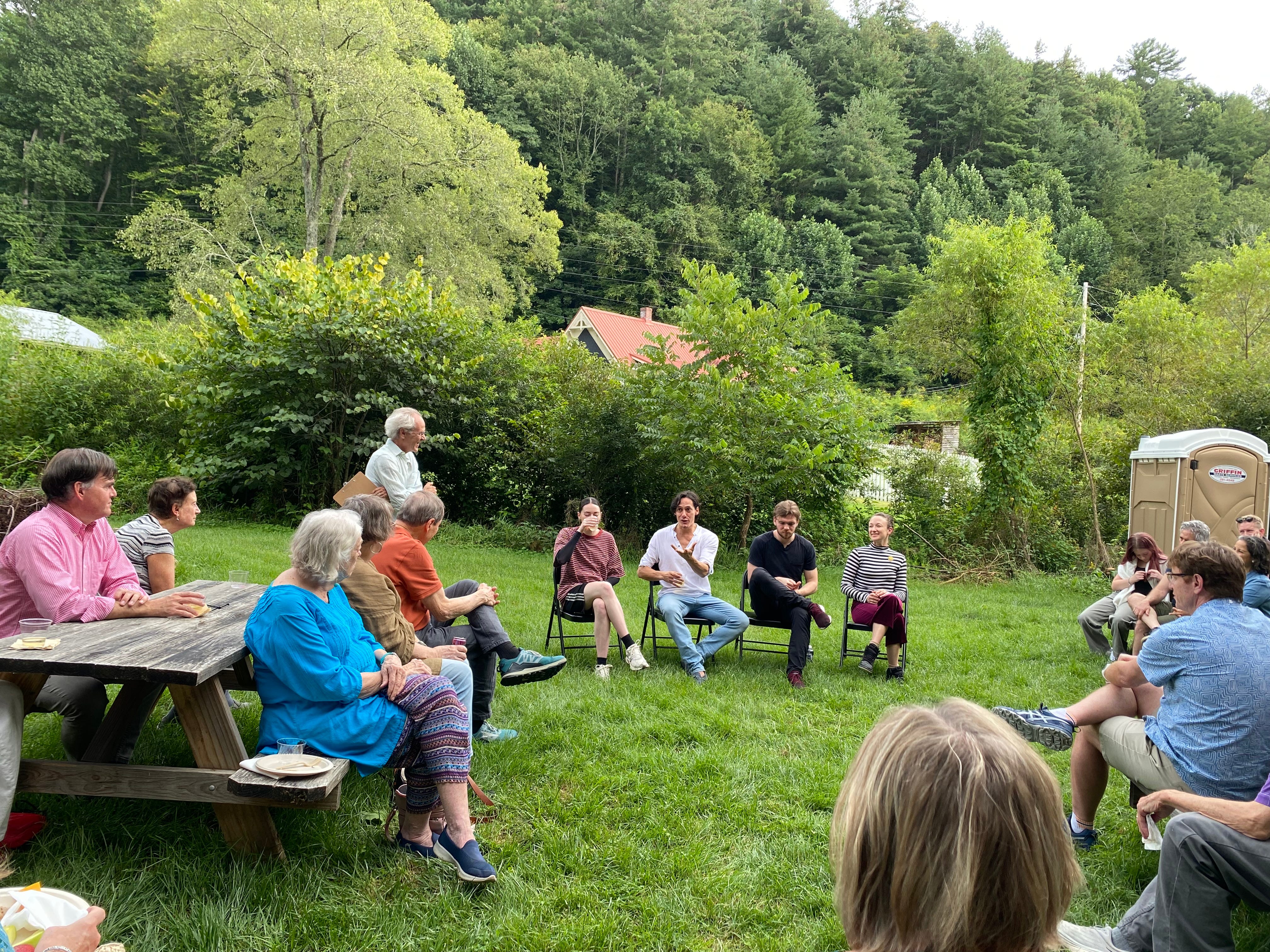
Marcelo also said that ultimately, he wanted to “translate into motion grief, anxiety, and loss… to give intention to movement in order to express the devastation that Helene left in our dance community. We, as artists, have the ability to translate and reveal the hope and resilience that is inside everyone.”
Speaking of intention, expressiveness, and movement… did you see this article by Gia Kourlas in the New York Times about what she dubs “secret weapon of dance”? 👋🏼 This is sure a topic that is very close to my heart! From Mr. Rapp (see Chapter 14) to Suzy (Chapters 15 and 16) and many others later on, teachers, choreographers, and dance influences (not dance influencers) helped me understand, embrace, and try to do justice to the underappreciated (until now) power and subtlety of the hand in dance.


