
Dance Through The Lens
The collaborative art of ballet photography

When I was dancing, I (almost) always liked doing photo shoots. They felt like a performance, but the kind where you could stop and redo things if you weren’t happy with how they went the first time. During a photo shoot, my yearning, wishing and anxious hoping to be spot-on during a live performance changed to a freer, more experimental feeling, a sense of there being lots of time and plenty of chances to get a movement or position just right. Of course, there still was pressure of a sort— time was not unlimited, and the director and marketing department were antsy for specific, sometimes quite difficult or awkward, images. And the conditions aren’t always easy to work in— unless you’re in an actual dance studio reconfigured for the photo shoot, the surface is probably hard or uneven and may not have great traction. The space might be small and confining, and the photographer needs you to execute whatever step or position they’re trying to catch on a very specific spot— sometimes a literal spot on the floor— or else your grand jeté may be gorgeous but your back foot is out of frame. I’ve done shoots in real ballet studios and theater stages, which were relatively comfy, but also did one on a Portland city street (see chapter 52), in a pool hall (see chapter 39), in warehouses, on a grassy field in a park, and on the beach. I was always up for anything, though. I didn’t care if my pointe shoes got muddy or the sun was relentless or the wind bit through my tights. It was a chance to expand, to get instant feedback (from the photographer’s cues and the display screen on their digital camera) and be able to make equally instant adjustments. In the best shoots, I felt more like a true collaborator than I ever did in my role as a dancer interpreting a choreographer’s work. The photographer’s encouragement and objective, analytical eye were more motivating than critical, more inspiring than dispiriting. In a concrete way, we were combining our skills for something we’d have equally produced.


Photo shoots were, to me, revealing and also revelatory. Revealing in that the good and bad were so starkly obvious in the pictures (my technique flaws embarrassingly obvious when caught mid-air, right along with the unique characteristics that many photographers noticed and urged me to play up), and revelatory because looking at the photos gave me a strange sense of remove from myself, somewhat like a dream in which you are watching yourself from afar. I felt a bit like a character in my own life, almost startled to see that dancer in the photo who looked just like me. Who is she? What is she thinking and feeling, how does she make her body do those things?
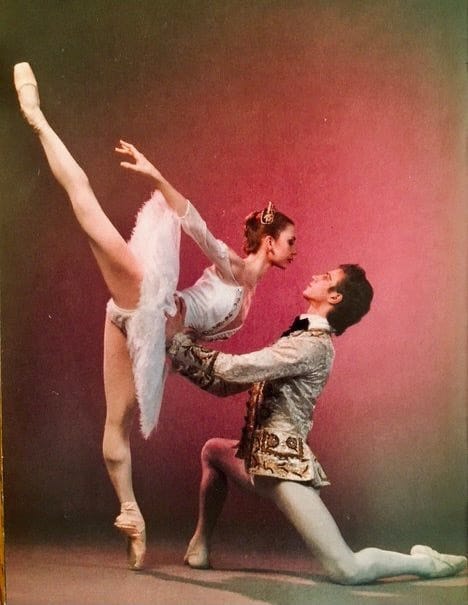
That’s what photographs do for us— they let us look at ourselves, see ourselves as others do, and perhaps understand ourselves in ways near-impossible when we’re literally wrapped up inside our own bodies. We can step out of our own world for a minute and ponder.
That’s what happened to Kylie Edwards, the dancer on the cover of Infinite Steps. Kylie started out heading straight for a purely ballet career, so sure that’s what she wanted that the wee itches she kept feeling for a different kind of theatricality were easily drowned out. But when she did a photo shoot with Gene Schiavone while on the cusp of getting her first ballet company job, the actress inside her came rushing out. Her best friend had sent her boxes full of costumes to wear at the shoot, which she giddily tried on, one after another. And when Gene asked what music she wanted to have on while they worked, she replied that she’d always loved Broadway, so how about some show tunes? “I think I’d always known that I was destined for Broadway,” she told me during our interview for Infinite Steps. “During that photo shoot, I felt like I was allowed to be the fullest version of myself, separate from the environment of the dance studio and the student ecosystem. I felt like I could find and define myself.”
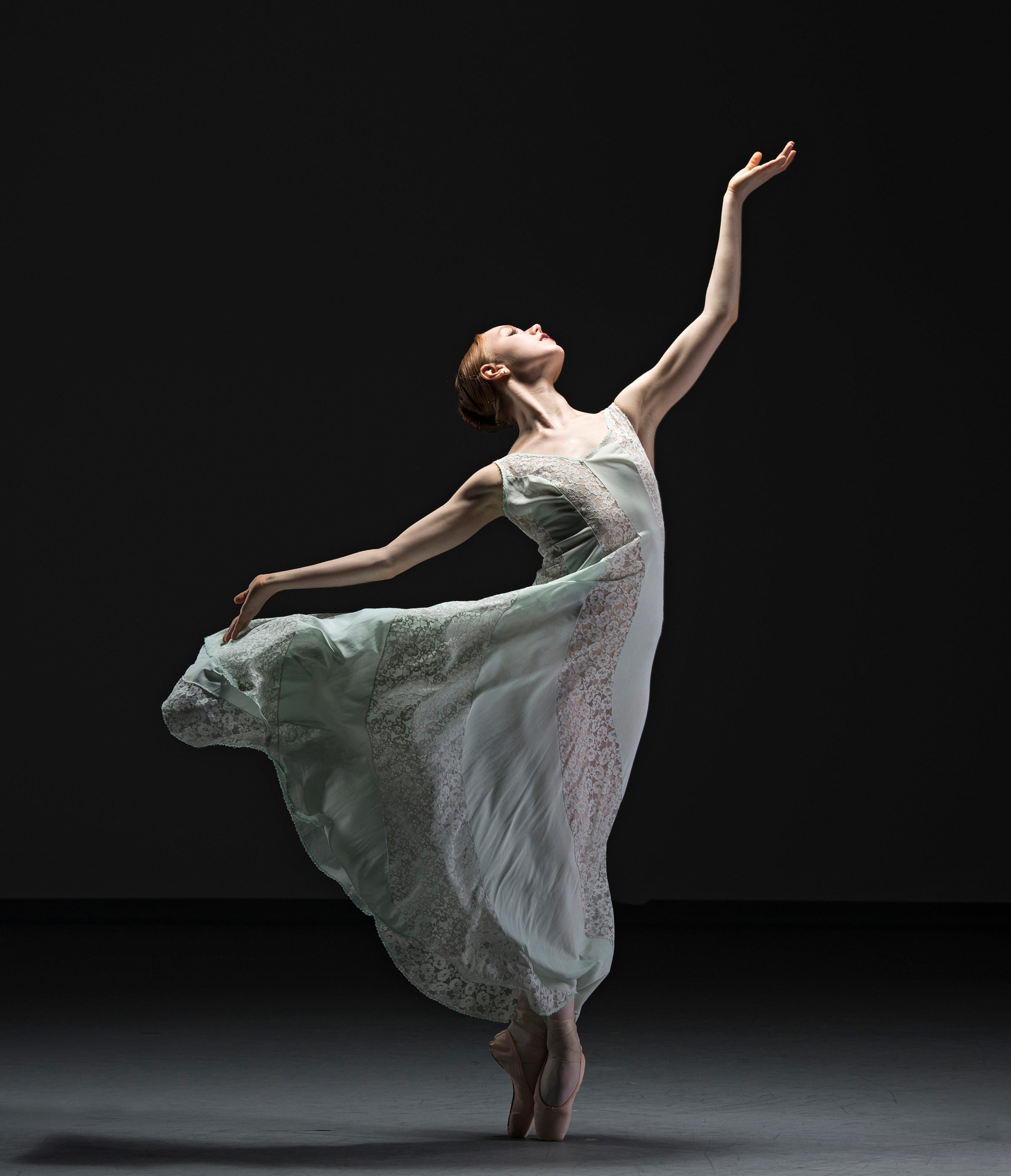
Kylie did embark on a ballet career, but not long after her first season with a company, she switched gears. Today, she’s fabulously successful as an actor— and dancer— in film, TV, and stage. In fact, she’s finishing up a stint in Brigadoon at the Pasadena Playhouse right now.


Photography and dance might seem to have little in common, and until I started working on this book with Gene, I never thought about or looked for parallels. After all, ballet is about continual movement (though I argue that stillness in dance is under-rated, under-utilized, and, unfortunately, when it is most artfully used, under-appreciated), but photography’s point is to freeze time. And photography relies heavily on equipment and gear, but the only equipment a dancer needs is folded into the everyday carrying case of their own body.
But, as I’ve learned from having just collaborated with Gene on our book of dance photographs and essays, and also from having a sister who is both a professional photographer and a natural mover, the commonalities between the art of capturing and framing motion and that of creating it are really strong. Photographers and dancers share an eye for line and symmetry, an ability to notice (and care about) the subtle details of a composition that can define (or wreck) the overall picture, and a stubborn refusal to let something go until it’s just right. While photographers are happiest hiding behind a camera and dancers live to perform in public view, they bond over a compulsion to create shapes that suspend time.
The more I think about it, the more I realize that what dance photography does that makes it so arresting is not that it captures dance itself— that’s impossible, anyway. A dance photograph captures the dancer, not the dance.
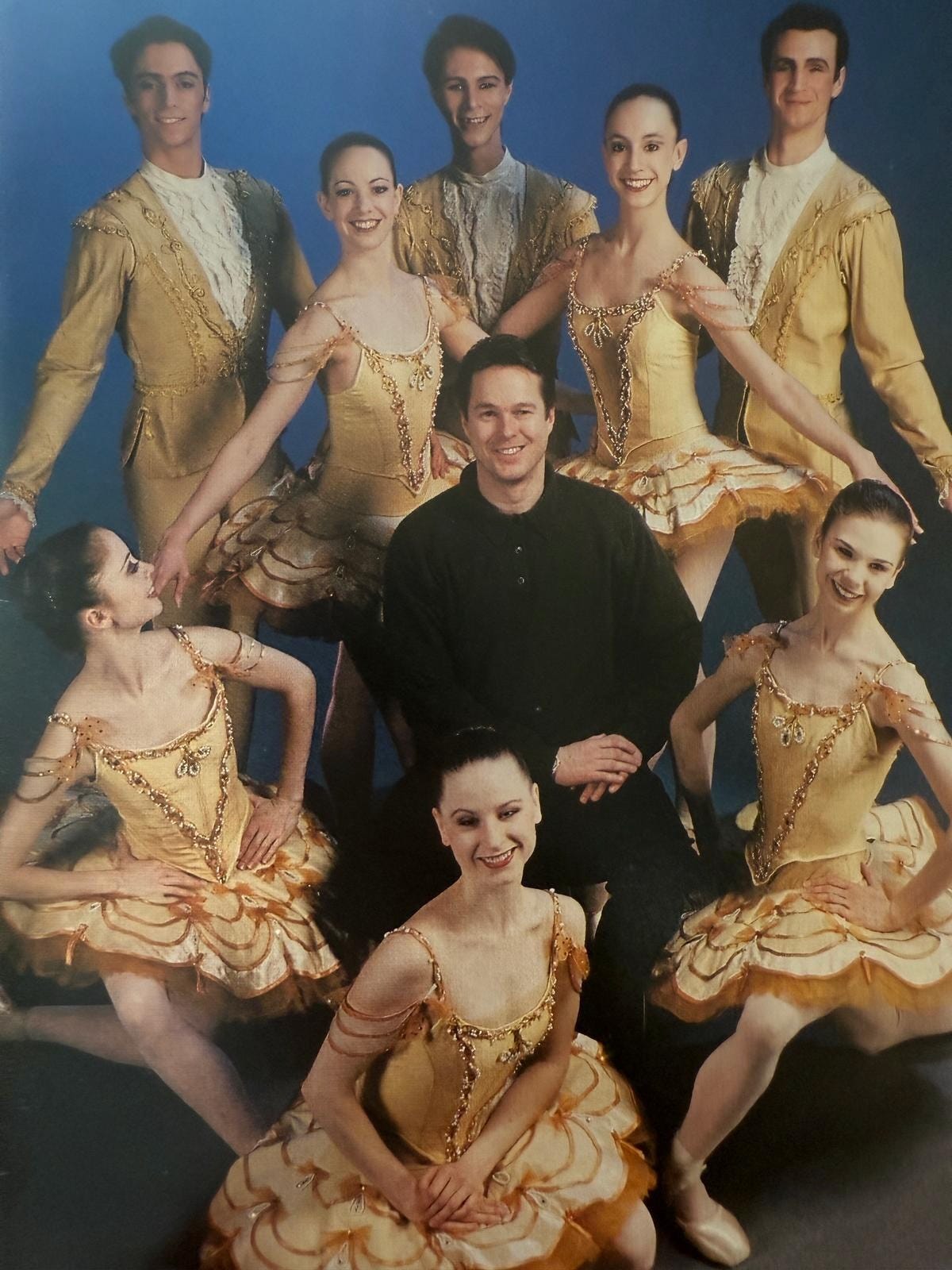
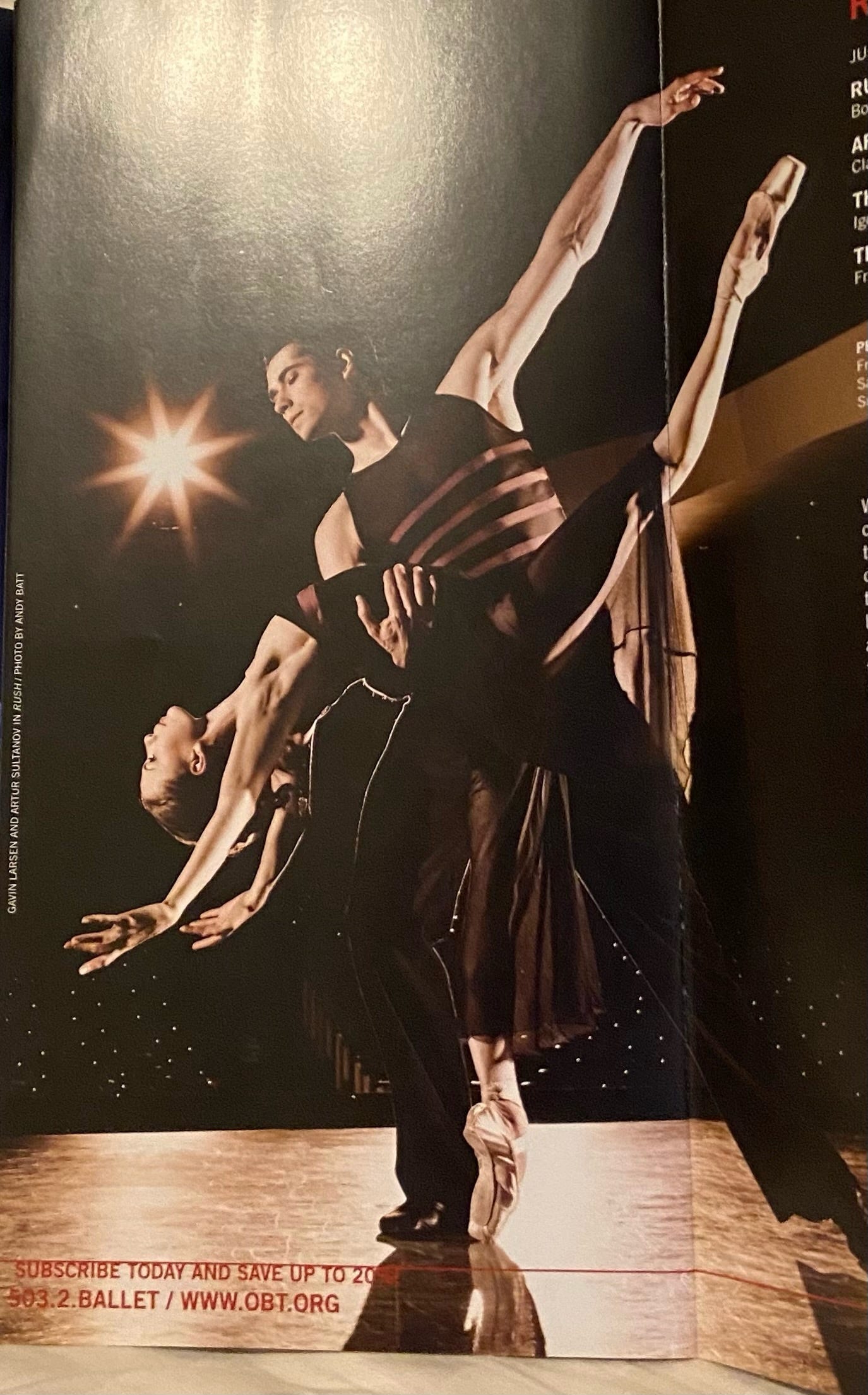
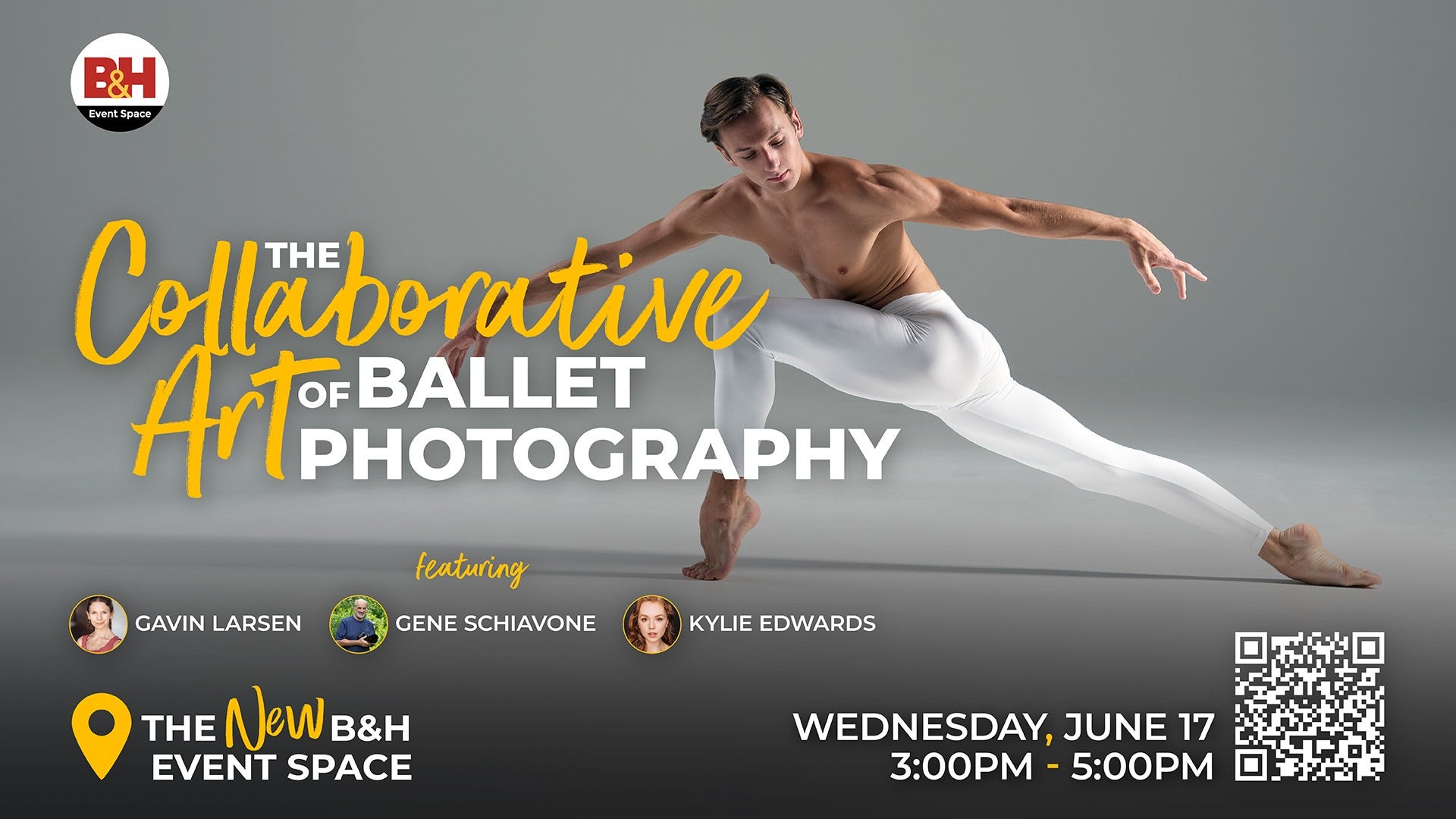
This week, I’ll be happily sitting down with Kylie and Gene to talk about all of the above, plus the ins and outs of being a dancer, a photographer, and how collaboration can change an artist’s own technique and perception. We’ll be at B&H Photo’s Event Space on Wednesday, June 17 from 3-5pm. Please join us!
Odds ‘n’ Ends
I’m a big advocate for failing— so long as it’s preceded by sincere effort. I teach my students that arriving at something— succeeding at it— is just a place to pause and catch your breath before taking more steps forward. With that in mind, achievement is actually a collage of mess-ups and adjustments. So imagine how cool it would be to take this class at Stanford University, called Dance 123: Hot Mess and Deliberate Failure as Practice. Taught by my former School of American Ballet classmate, Alex Ketley, the course guides students to rise above the self-consciousness of looking silly, “bad,” or unpolished while doing dance exercises. The idea is to carry that acceptance— that ease— into other walks of life. “What happens if we accept failure as a creative virtue?” he said. I think it’s also about shedding our cultural need to always be right, to be first, to be the best, to have the most. Ketley’s seen what happens when artists relax into messiness, softening their fierce grip on the proverbial steering wheel of life. “I noticed a type of brilliance when people relinquish control,” he said. I’m going to hold that in my own hand, gently.
Another former colleague, Brian Simcoe, is retiring from Oregon Ballet Theatre today. Brian, who was just a student in the School of Oregon Ballet Theatre when I joined the company and eventually rose to principal, is one of the most sensitive, empathetic and graceful partners, dancers, and people I’ve ever known. I wish him a glorious final performance full of joy, and I know that he’ll carry his brilliance far beyond the stage.
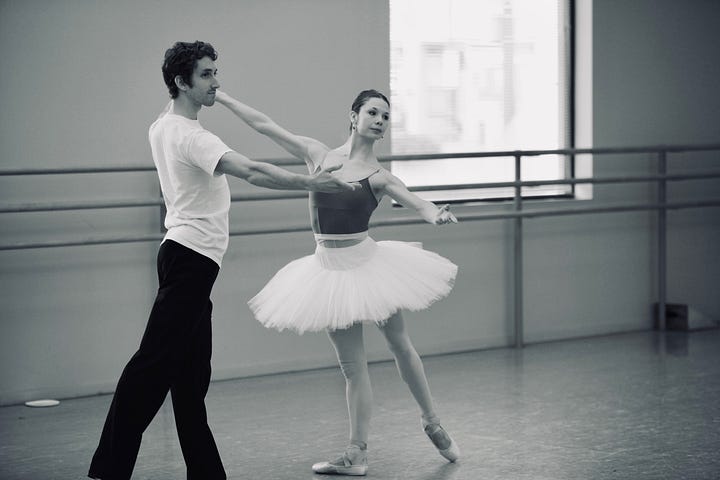
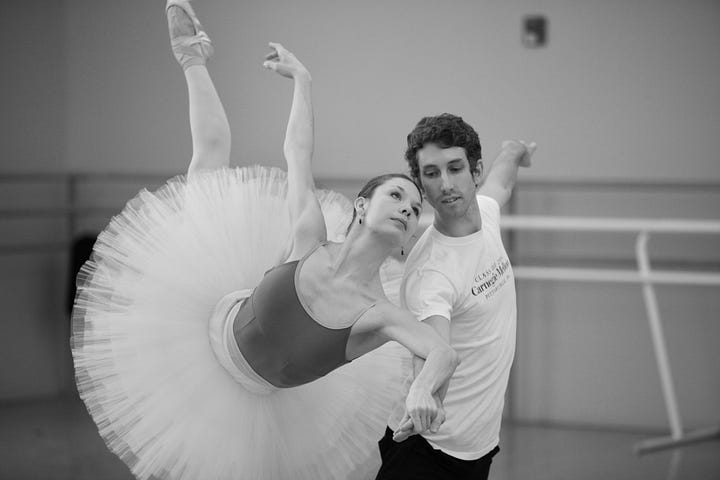
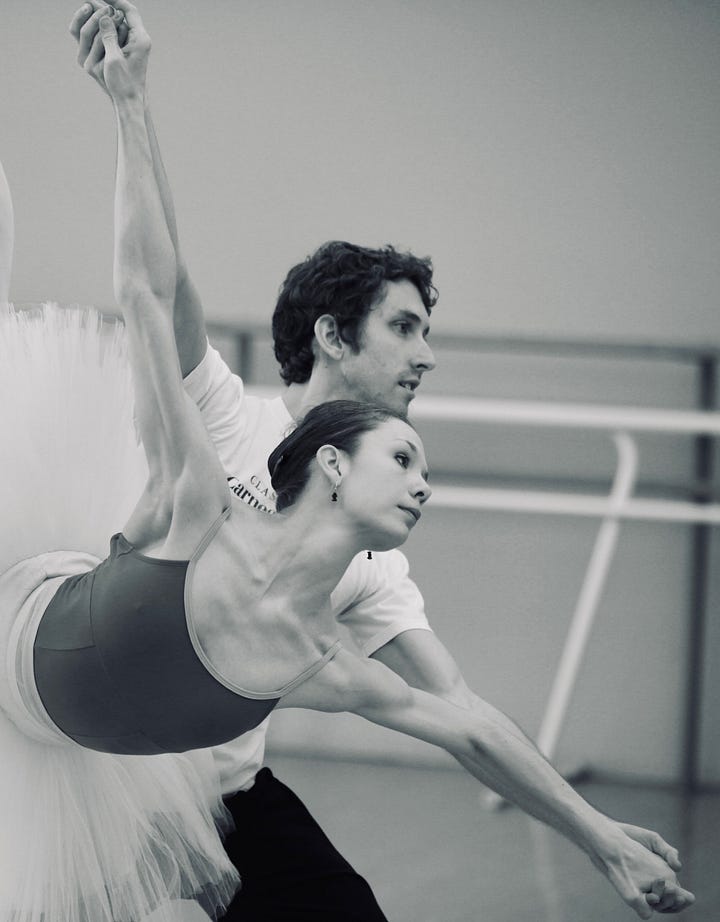
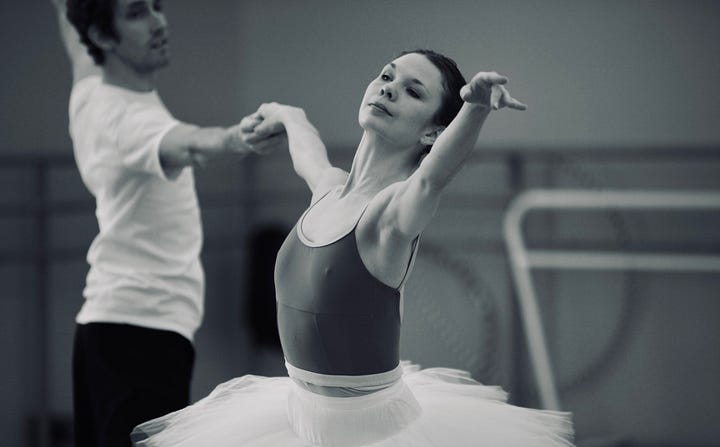
Rehearsing The Nutcracker with Brian, 2009.


If you have read and enjoyed one or both of my books, would you please take a moment (if you haven’t already done so) to post a rating and review? Every reader testimonial helps bring more visibility and longevity to my work. THANK YOU!
(Best places to do this are Amazon, Barnes & Noble, or Goodreads. And of course, simply by telling anyone you know who might enjoy the books is immensely appreciated!)
Until next time,
Gavin
Absolutely fantastic. An original, detailed but concise description of ballet and photography from the viewpoint of a dancer who’s spent considerable time being photographed.